
Paint Protection Film Benefits, Types and Complete Guide | Why Do You Need It?
Every day, your car’s paint job is under attack from road debris, stone chips, bug splatter, bird droppings, and UV rays. One of the best ways available to protect against all of it is with Best Paint Protection Film (PPF). If you’ve just bought a brand new car, or you’re looking to keep a used car looking pristine, Best PPF is a product you should know about. This guide explains what it is, how it works, how much it costs, and if it’s a good investment for you.
Carfence is more than a plastic coating as it is a high-quality car paint protection film. It is a technologically advanced TPU (Thermoplastic Polyurethane) shield that is engineered to take the impact of road debris, withstand chemical stains, and self-repair minor scratches. Either you want to discover the best PPF brand to protect a luxury sedan, or a rough SUV, the knowledge of the technology of the film is the initial way to long-term car maintenance.
What is Paint Protection Film?
Paint Protection Film (PPF) is a thermoplastic urethane (TPU) film that is directly applied to painted exterior surfaces of a vehicle. It serves as a barrier between the paint on your car and the environment.
The film is optically clear, almost invisible when professionally installed. It fits the curves and contours of your vehicle’s body panels, providing a long-lasting barrier that protects the paint from damage caused by road hazards.
PPF was first invented by the U.S. military during the Vietnam War to shield helicopter rotor blades from damage caused by debris. The automotive industry embraced and adapted the technology, and today it’s a staple for car lovers, luxury vehicle owners, and anyone who wants to keep their car in top condition.
How Does Paint Protection Film Work?
PPF operates by both impact absorption and self-healing chemistry. Here’s what happens at a material level:

Impact Resistance
The urethane film is hard enough to take the impact of gravel, sand and road debris. The film absorbs the impact rather than the paint, which helps to spread the impact over the film and keeps chips and scratches from forming.

Self-Healing Technology
The majority of high-quality PPF products have a self-healing top coat. The film's polymers flow back into place and erase the scratch when the film is scratched by normal contact, such as light swirl marks from washing or minor abrasions, and the heat from the sun or hot water.

UV Protection
Good PPF also protects against UV rays. UV exposure causes paint to oxidize, fade and become chalky and dull over time. The film blocks these rays from damaging the paint below.
What Does PPF Protect Against?
Threat | Protected by PPF? |
|---|---|
Stone chips and rock debris | ✅ Yes |
Minor scratches and swirl marks | ✅ Yes (self-healing) |
Bug splatter and bird droppings | ✅ Yes |
UV rays and sun fading | ✅ Yes |
Tree sap and environmental fallout | ✅ Yes |
Light key scratches | ✅ Partially |
Door dings and dents | ❌ No |
Deep gouges | ❌ No |
Rust and corrosion (underlying) | ❌ No |
Types of Paint Protection Film
Not all PPF is created equal. There are several categories to know before you commit to an installation.
- Gloss PPF: The most popular type, gloss PPF preserves the original factory sheen of your vehicle. It adds depth and clarity and helps to preserve the paint below. Perfect for cars that have dark or metallic paint jobs, as any dullness will be obvious.
- Matte PPF: Matte PPF will provide a flat, satin finish to your vehicle, ideal for factory matte painted cars or those who wish to alter the appearance of their glossy car without having to respray. It also safeguards, as does its glossy counterpart.
- Colored PPF: Some manufacturers provide PPF in different tints and shades, which means that a color change and protection are achieved in one product. This is an expanding market, particularly favored by car customization fans.
High Protective PPF Collection
Luxury Protection With Stunning Finish
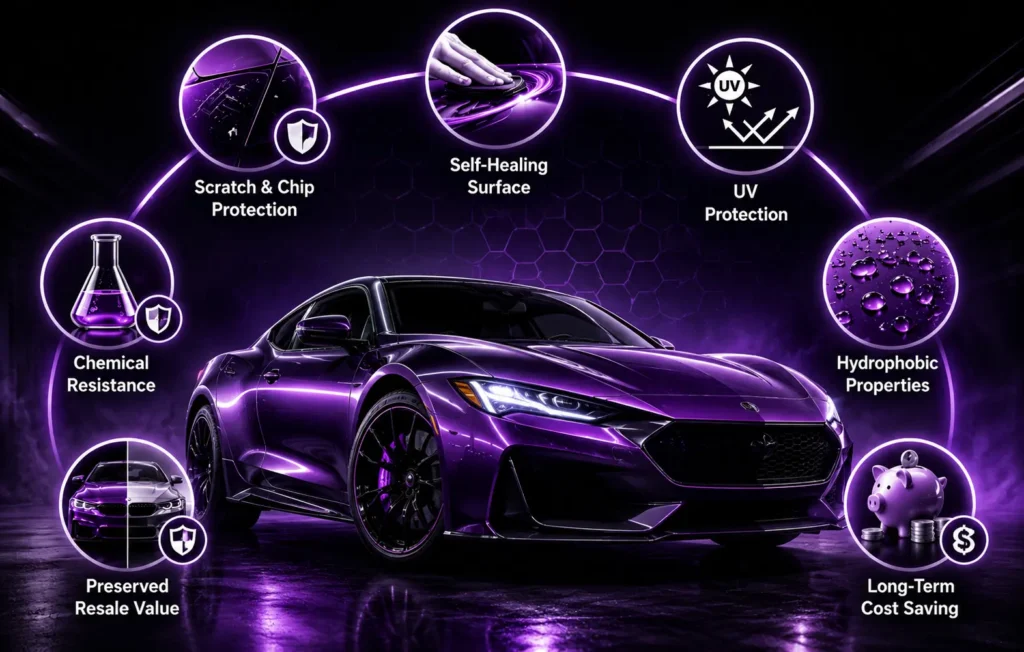
Key Benefits of Paint Protection Film
The advantages of PPF go well beyond simply preventing scratches. Here are some reasons why it’s an attractive investment for many car owners:
| Benefit | What It Means for Your Car |
| Scratch & Chip Protection | Absorbs impact of road debris before it reaches the paint. |
| Self-Healing Surface | Minor abrasions vanish with heat — no professional correction needed |
| UV Protection | Filters out damaging UV rays that lead to fading and oxidation |
| Chemical Resistance | Protection from bird droppings, tree sap, road salt and bug residue. |
| Hydrophobic Properties | Water and dirt roll off, minimizing maintenance needs. |
| Preserved Resale Value | A perfect exterior will fetch more in the used car market. |
| Long-Term Cost Saving | Avoids the need for repeat paint correction and touch-up work |
How Long Does Paint Protection Film Last?
With proper care, a quality PPF installation can last 5 to 10 years. But there are a number of factors that determine longevity:
- Film brand and quality: Premium brands last much longer than budget brands.
- Climate and Exposure: Harsh UV environments or extreme cold can shorten lifespan.
- Maintenance Habits: Regular washing and the use of non-harsh chemicals helps to maintain the film.
- Installer Quality: Poor installation leads to lifting edges and premature failure.
Most quality PPF brands offer a manufacturer’s warranty of 5 to 10 years against yellowing, cracking, peeling and hazing. When installing, always ask your installer what film they use and if it is warranted.